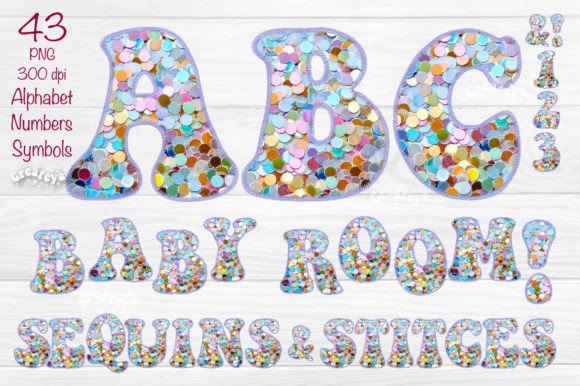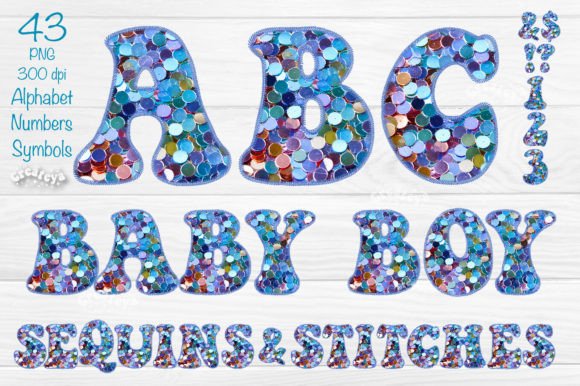
Baby Alphabet PNG Boy Glitter Letters
First Impressions: Sparkle Without the Stitching Stress
Opening Baby Alphabet PNG Boy Glitter Letters feels like unboxing a well-curated craft kit—clean, cheerful, and instantly legible. The letters carry that classic baby-boy palette: navy, grey, soft sky blue, and warm mustard, all with a subtle glitter texture baked into the PNG layers. It’s not over-the-top bling—it’s tasteful shimmer, like light catching on a tiny brass button or a satin ribbon bow. As an embroidery designer who’s stitched hundreds of baby-themed projects, I immediately sense this set belongs on something soft, personal, and gently celebratory: a linen baby blanket, a cotton muslin onesie, or a hand-stitched nursery wall hanging.
Where This Design Truly Shines (and Where It Needs Guardrails)
In real-world use, Baby Alphabet PNG Boy Glitter Letters works beautifully as a starting point for custom apparel and handmade goods—but only when you treat it as a *design foundation*, not a plug-and-play embroidery file. Let me be clear: this is a graphics asset, not a ready-to-embroider machine embroidery design. That distinction matters deeply.
I recently used it to create a personalized embroidered tote bag for a boutique client—a “BEN” monogram centered on a natural canvas bag. I traced the letterforms into my digitizing software, simplified the glitter texture into delicate satin stitch outlines, and added gentle fill gradients using matte cotton thread. The result? A refined, boutique-quality finish—not a literal translation of the PNG’s sparkle, but a thoughtful interpretation that held up under stitching and wear.
This set excels in projects where clarity and charm outweigh technical complexity: baby embroidery on onesies and burp cloths, sweatshirt embroidery for toddler gifts, embroidered patches for nursery backpacks, and pillow covers with single-letter accents. It also translates cleanly into printable mockups for Etsy sellers—especially those offering custom baby items or holiday embroidery bundles. As a digital embroidery file source, it’s ideal for designers building their own applique design libraries or crafting signature monogram systems for their craft business.
Use With Care: Texture, Scale, and Fabric Realities
Don’t rush this into dense or tricky applications. The glitter effect relies on fine detail—and fine detail doesn’t always survive the needle. On textured fabrics like terry cloth or looped fleece, intricate edges can blur. On stretchy knits (think baby leggings or ribbed bodysuits), unstabilized satin stitch borders may pucker unless digitized with careful underlay and reduced density. And on dark fabric? That subtle glitter won’t read without high-contrast thread colors—test your thread colors on scrap first, especially for small lettering.
Avoid cramming Baby Alphabet PNG Boy Glitter Letters into tight hoop sizes (under 4" diameter) without simplifying shapes. Tiny “i” dots or narrow crossbars in “A” or “H” risk disappearing in fill stitch or becoming unstable running stitch anchors. Likewise, curved surfaces—like caps or beanies—demand repositioned stitch angles and adjusted tension; what looks balanced flat on screen rarely behaves the same on a dome.
What It Adds to Your Finished Product (Beyond Pretty Letters)
Used thoughtfully, this set elevates perceived value. Customers notice intentionality: a carefully digitized “L” with tapered satin edges reads as handmade craftsmanship, not mass-produced clip art. For an Etsy seller, that nuance builds trust—especially when paired with consistent branding across listings, packaging, and social previews. It also strengthens giftability. A personalized tea towel with a glitter-inspired “M” monogram feels more special than generic script, even before embroidery begins.
But let’s be honest: slapping the PNG straight onto a layered garment (say, a quilted baby carrier) without adjusting for fabric thickness or stitch density risks a stiff, bulky result. That’s where your judgment as a designer kicks in—not just digitizing skill, but understanding how each element contributes to the finished product’s drape, comfort, and longevity.
Practical Designer Notes You’ll Actually Use
- Always test on scrap fabric—same type, same stabilizer, same thread count—as your final project.
- Review stitch density in your digitized version: too dense = stiffness; too sparse = loss of shape, especially on curves.
- Confirm hoop size compatibility early—don’t assume a 5x7" layout will fit a 4x4" cap hoop without adjustment.
- Inspect corners and joins at 200% zoom: does the “R” leg hold clean definition? Does the “S” curve flow smoothly in satin stitch?
- Try black-and-white mockups: if the letterform loses personality without color, simplify its structure before digitizing.
- Compare light vs. dark fabric backgrounds in your preview—some glitter textures vanish on navy unless reinforced with metallic or high-sheen thread.
- Use tear-away + cut-away stabilizer combo for baby items—softness matters, but so does stability on thin cotton.
- Verify licensing before selling finished items or bundling as design assets. Since this is listed under Crafts and Graphics, commercial use likely requires review—not assumption.
Final Thought: Charm Is Earned, Not Applied
Baby Alphabet PNG Boy Glitter Letters isn’t magic—it’s potential. Its strength lies in its mood, not its machine-readiness. As a designer and reviewer, I appreciate assets that invite thoughtful adaptation rather than demand blind replication. Whether you’re stitching a one-of-a-kind baby shower gift, building a cohesive line of small shop products, or refining your commercial embroidery offerings, this set rewards patience, context-aware digitizing, and respect for how thread, fabric, and human eyes interact. Use it as inspiration—not instruction—and your handmade product will feel both joyful and intentional.