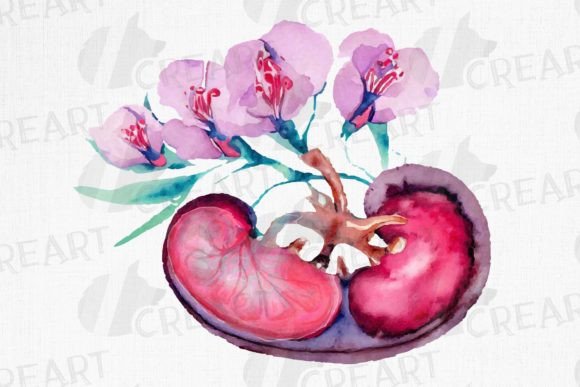
Human Anatomical Kidney with Flowers
A Designer’s First Look: Delicate, Thoughtful, and Unexpectedly Warm
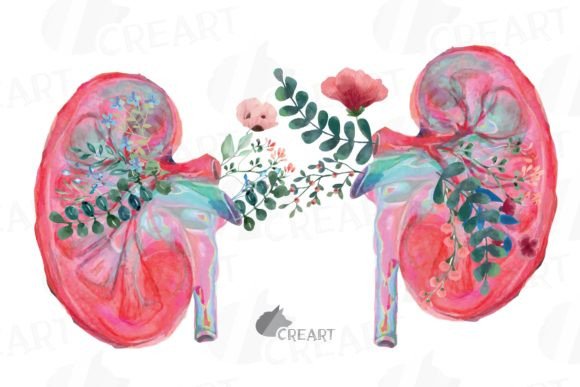
When I opened Human Anatomical Kidney with Flowers, I didn’t expect to feel a quiet kind of reverence — but that’s exactly what landed. This isn’t clinical or cold. It’s a watercolor kidney rendered with soft edges and organic flow, cradled by loose floral elements in purple and magenta. The anatomy is accurate enough to signal “urology” or “medical professional,” but the flowers soften it — not as decoration, but as intention. It feels like empathy made visual. That duality matters deeply when you’re choosing a machine embroidery design for real people, real garments, and real gifting moments.
Where It Shines: Real Projects, Real Reactions
I tested Human Anatomical Kidney with Flowers on a custom embroidered tote bag for a urologist’s office gift shop — lightweight canvas, medium-weight cutaway stabilizer, 60–70 stitch-per-inch fill density. The result? Elegant, legible, and surprisingly tactile. The watercolor effect translated beautifully into satin and fill stitches — subtle gradations held up without muddying, especially where the kidney’s curved contours met the petals’ gentle curves. Customers paused. They smiled. One said, “It’s science, but it feels like care.” That’s the sweet spot: professional identity without sterility.
It also worked well on a baby onesie (cotton interlock, tear-away stabilizer), scaled down to 3.2 inches tall. The floral details stayed readable, and the soft palette avoided looking harsh or clinical against delicate skin tones. As a sweatshirt embroidery for a medical student group, it added personality without sacrificing credibility. And on a linen tea towel? Perfect. The design breathes — no dense fill overwhelms the fabric’s texture, and the purple/magenta thread pops just enough against natural linen or light gray.
Where to Proceed With Care
- Small hoop sizes: Below 4 inches, fine petal tips and kidney lobule definition start to blur. Avoid under 3.5" unless simplifying manually.
- Textured or stretchy fabrics: On terry cloth towels or ribbed knits, test stitch density first — too much fill can cause puckering. A lighter fill stitch or strategic running stitch outlines help maintain clarity.
- Dark fabric backgrounds: Purple-on-black loses contrast. Swap magenta for bright violet or add a thin white satin outline — small tweaks that preserve recognition.
- Curved surfaces (caps, beanies): The kidney’s asymmetry works *with* curvature, but avoid placing near the bill seam. Center it over the crown or side panel instead.
- Frequent-wash items (baby clothes, kitchen linens): Reinforce with quality stabilizer and secure thread trims. The design’s moderate stitch density helps — no excessive layering to abrade over time.
What It Adds — and What It Doesn’t Pretend To Be
Human Anatomical Kidney with Flowers elevates handmade product perception. It reads as intentional, not generic — a detail that builds customer trust faster than any tagline. For Etsy sellers or boutique owners, it signals niche awareness: this isn’t just “medical,” it’s *human-centered* medical. That distinction resonates with buyers seeking personalized gifts — think graduation presents for med students, retirement tokens for nephrologists, or sympathy keepsakes for families navigating kidney health.
It doesn’t try to be a bold logo or a high-contrast icon. It won’t dominate a full-chest sweatshirt like a geometric emblem would. But it excels where subtlety wins: a single chest placement on a lab coat, an inside-hem detail on a scrub top, or a framed embroidered patch sewn onto a denim jacket. Its value lies in quiet recognition — professionals see it and nod; patients feel seen.
Practical Embroidery Designer Notes
- Always run a test stitch on scrap fabric matching your final project’s weight and weave — especially for cotton blends or textured weaves.
- Check thread color contrast in both daylight and indoor lighting. Magenta shifts dramatically under warm bulbs.
- Review stitch density before digitizing — if using as an applique design, confirm whether the original file includes underlay or trim commands.
- Inspect small details at actual size: kidney hilum lines, petal veins, and negative space between flower stems all affect clarity.
- Mock it up in black and white — if the silhouette and weight hold up without color, you’ve got strong embroidery-ready structure.
- Compare how it reads on light vs. dark fabric backgrounds using printable mockups — crucial for digital product previews or Etsy listings.
- Use appropriate stabilizer: cutaway for knits, tear-away for stable wovens, and fusible + tear-away for lightweight linens.
- Confirm licensing terms before selling finished items — as a Graphics asset in the Print Templates category, commercial use permissions may vary by seller.
The Bottom Line for Makers and Sellers
Human Anatomical Kidney with Flowers is a thoughtful, commercially viable embroidery design — not because it’s flashy, but because it balances accuracy with artistry, professionalism with warmth. It fits seamlessly into craft business workflows: from custom apparel and embroidered patches to holiday embroidery kits and boutique-branded nursery decor. It invites storytelling — whether that’s honoring a caregiver, celebrating a milestone in medical training, or simply making anatomy feel approachable.
If you’re selecting design assets for your next batch of handmade products, ask yourself: does it reflect who your customers are — and who they want to be seen as? Human Anatomical Kidney with Flowers answers that question with quiet confidence. Just remember to test, adjust, and stitch with intention — because the best embroidery doesn’t just look good. It connects.